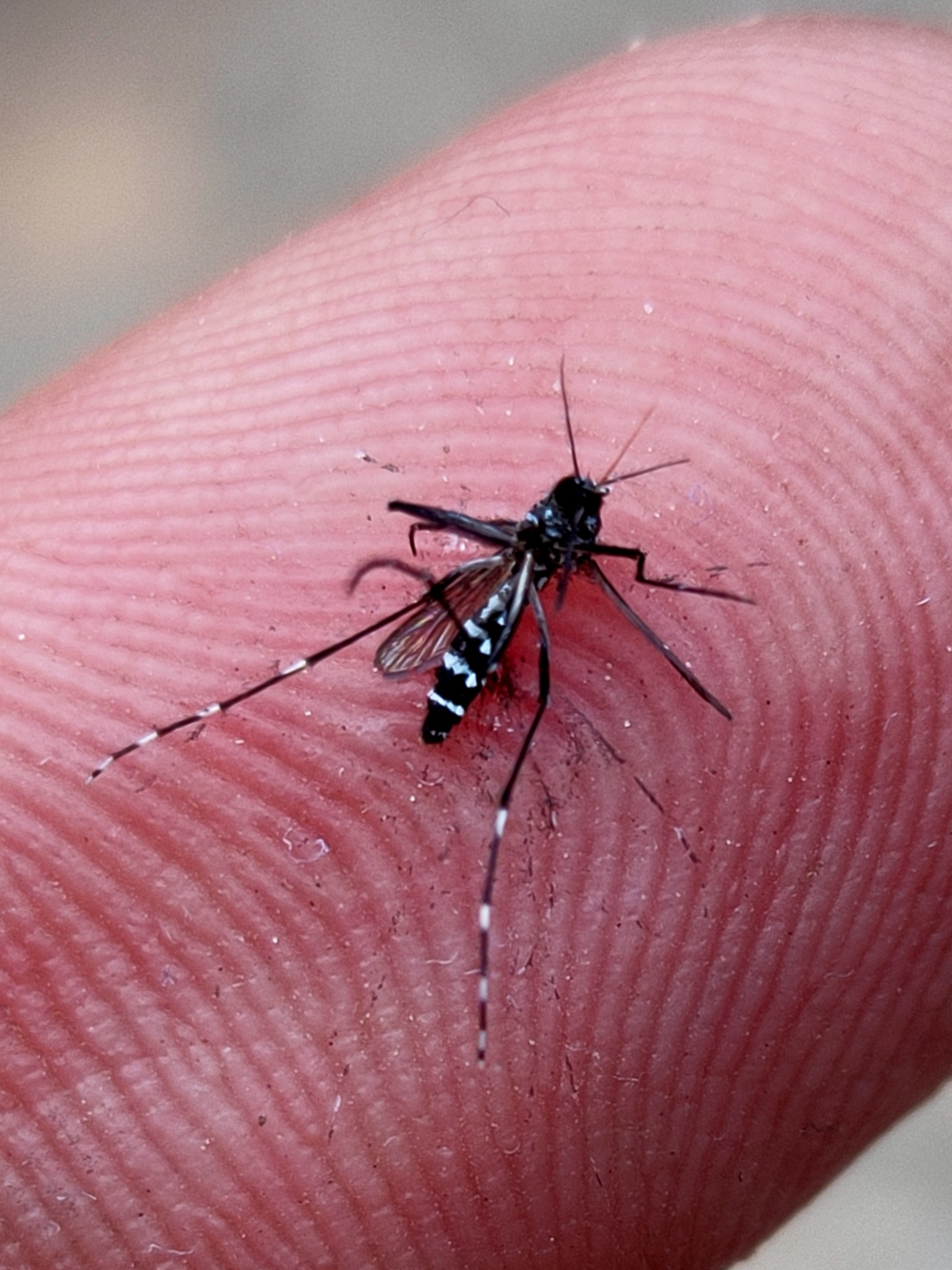
A Northern Virginia resident has contracted dengue fever without leaving the state, the Virginia Department of Health confirmed Tuesday, Aug. 4, marking the first documented case of locally acquired dengue in Virginia history.
The Fairfax County and Loudoun County Health Departments are both involved in the investigation, placing the case squarely in the agencies that serve McLean and Great Falls.
State Health Commissioner Cameron Webb said in a clinician letter that the patient had been in close proximity to another Virginia resident who was diagnosed with dengue after returning from international travel a couple of weeks earlier. Health officials believe a local Aedes mosquito bit the infected traveler while that person was contagious, then bit the second resident.
Dengue cannot spread directly from person to person. It requires a mosquito intermediary.
No ongoing threat, but peak season continues
As of Aug. 4, VDH reported no evidence of continued transmission and no additional locally acquired cases. The department said the overall risk of contracting dengue in Virginia remains low.
Still, Virginia's mosquito season runs from early May through early November, according to VDH, meaning residents are in the heart of peak exposure months. VDH is conducting mosquito surveillance and monitoring for additional cases with local partners.
What McLean residents should do
VDH urges residents to "tip and toss" any containers around homes and businesses that hold standing water. Aedes mosquitoes breed in water-filled containers as small as a bottle cap. The department also recommends using EPA-registered insect repellent when outdoors.
Dengue symptoms include fever, severe headache, pain behind the eyes, muscle and joint pain, nausea, vomiting and rash. Symptoms typically appear five to seven days after a bite and last two to seven days. Most people recover within about a week.
About 1 in 20 infected people develop severe dengue, which can cause shock, internal bleeding and death. Symptoms can worsen within hours, making it a medical emergency.
Why local transmission is unusual
Most dengue cases reported in the United States involve travelers returning from countries where the virus circulates widely. Limited local transmission has been documented in the U.S. but remains rare. Dengue has been increasing globally in recent years, driven by international travel, urbanization and climate conditions that favor Aedes mosquitoes, The Washington Post reported.