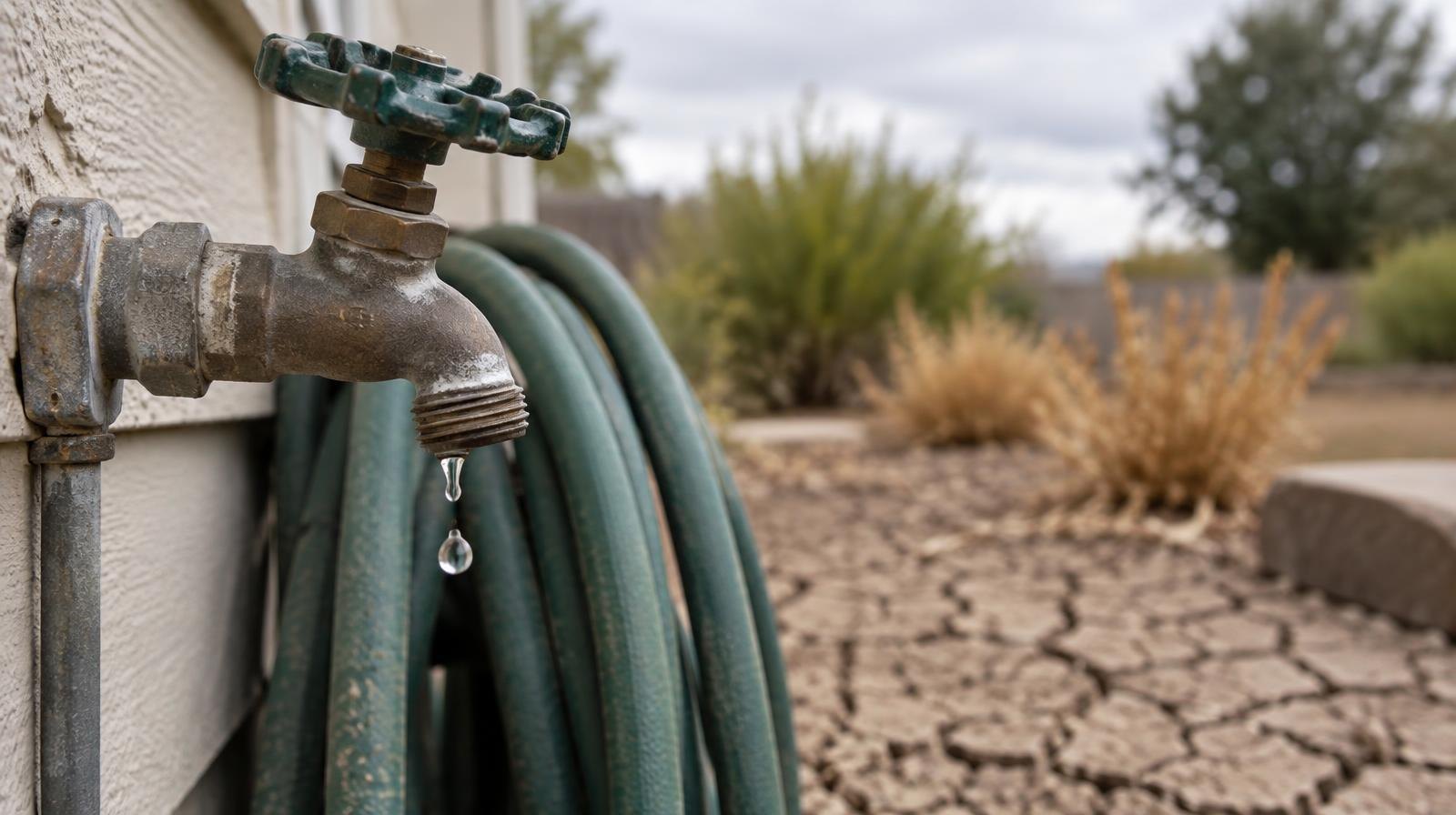
Fairfax County's nine-month drought warning dropped to a drought watch on Friday, Oct. 2, after weeks of steady rain pushed precipitation back to normal levels across Northern Virginia.
The Virginia Department of Environmental Quality (DEQ) announced the de-escalation, first reported by FFXnow, which also covers Arlington, Loudoun, Prince William and Fauquier counties and the cities of Alexandria, Fairfax, Falls Church, Manassas and Manassas Park. The drought warning had been in place since January.
The dry spell isn't over.
A separate regional drought watch declared June 3 by the Metropolitan Washington Council of Governments (COG) remains in effect for nearly 6 million residents across the District of Columbia, suburban Maryland and Northern Virginia. COG officials have encouraged residents to voluntarily reduce water use to protect the Potomac River supply.
Groundwater in Northern Virginia also remains at emergency status. A U.S. Geological Survey presentation to DEQ's Drought Monitoring Task Force flagged one well in southern Prince William County as nearly empty, according to FFXnow.
What improved
The task force's Sept. 29 report found that northern Virginia received 1 to 3 inches of rain in the prior seven days. Large portions of the region hit 125% to 150% of normal precipitation over the past 60- and 90-day periods. Precipitation, reservoir and streamflow levels have all returned to normal, according to the task force.
Since Sept. 1, Dulles International Airport recorded 4.2 inches of precipitation, with an additional 0.4 inches through Monday, Oct. 5, per National Weather Service data.
The National Weather Service predicts a strong El Niño pattern will bring higher-than-normal rainfall to Virginia this fall and winter, according to DEQ's announcement.
The bigger picture
Virginia ended the water year that ran from Oct. 1, 2025, to Sept. 30, 2026, with an average precipitation deficit of 9.7 inches statewide, DEQ said. The Potomac River hit its lowest level in 130 years of records during March and April, according to COG.
DEQ said in its announcement that sustained rain prevented drought conditions from worsening but that drought continues in many parts of Virginia, especially in the Roanoke River region in the state's south, where Gov. Abigail Spanberger declared a state of emergency in September to help farmers feed livestock amid a hay shortfall.
Statewide, 400 public water systems remain under voluntary restrictions and 45 under mandatory restrictions, affecting nearly 46% of Virginia's population, according to the Virginia Department of Health.
Looking ahead
The drought has already prompted long-term planning. Fairfax Water, which serves about 2.2 million customers across Northern Virginia from the Potomac River and Occoquan Reservoir, joined Maryland's WSSC Water and the U.S. Army Corps of Engineers on a $25 million "Secure the Source" study to find backup water supplies, FFXnow reported in June.
Fairfax Water spokesperson Susan Miller told FFXnow in June, when the utility joined the study, that "climate variability makes it harder to rely on historic trends to predict river flows, drought timing, or the severity of dry periods."
The Fairfax County Board of Supervisors also acted in June, authorizing Chairman Jeff McKay to write to Spanberger requesting that the Potomac River be excluded from any statewide drought emergency declaration. McKay argued in the letter, reported by WTOP, that a blanket declaration would "risk unnecessary hardship for more than 2.2 million people and the economy of Northern Virginia …"
DEQ's Drought Monitoring Task Force was scheduled to meet again on Tuesday, Oct. 6. Under COG's regional plan, a watch calls for voluntary conservation, a warning calls for voluntary restrictions, and an emergency calls for mandatory restrictions.