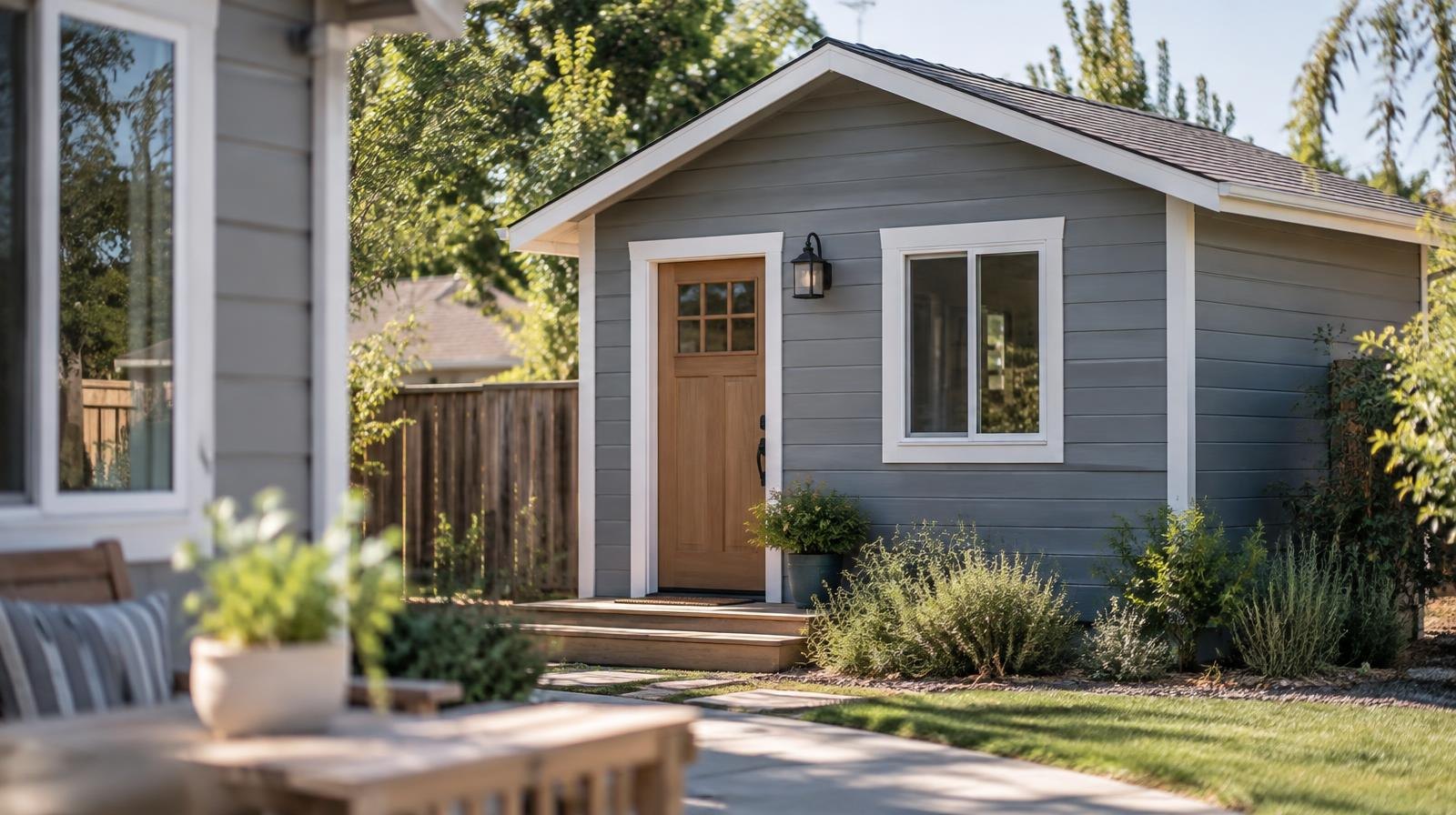
Dozens of Fairfax County residents told the Planning Commission to keep the rule requiring homeowners to live on a property before renting out an in-law suite or backyard cottage.
The owner-occupancy provision topped a list of objections to a proposed zoning amendment that would loosen regulations on accessory living units, or ALUs, Annandale Today reported. Representatives of the McLean Citizens Council, the Great Falls Citizens Association and the Sully District Council of Citizens Associations were among those raising concerns, along with neighborhood groups from across the county.
The Planning Commission deferred a vote on the ALU ordinance to Nov. 4. The Board of Supervisors hearing is scheduled for Nov. 17.
What would change
ALUs are secondary dwellings, either inside a home or in a separate structure on the lot. They must include a kitchen, bathroom, bedroom and living space. Fairfax County wants to make it easier to build them as part of its strategy to increase the housing supply.
County zoning staff members Carmen Bishop and Casey Judge outlined the proposed changes at the hearing. Among them:
- Dropping the requirement that the property owner live on-site
- Allowing detached ALUs by right on lots of 36,000 square feet or larger, down from the current two-acre minimum
- Eliminating the requirement for one additional off-street parking space
- Raising the height limit for detached ALUs from 20 feet to 35 feet on lots over 36,000 square feet
- Increasing the maximum ALU size to 1,200 square feet or 40% of the main home, whichever is smaller
- Raising the occupancy cap from two people to three
By-right projects would not require notification to nearby residents or hearings, according to Annandale Today.
'Not what constituents want'
Tyler Ray, vice chair of the Mason District Council, spoke on behalf of 12 civic associations. He said removing parking requirements, eliminating owner-occupancy safeguards and expanding occupancy limits "could fundamentally alter single-family neighborhoods."
"It's not in the best interest of our communities, and it's not what constituents want," Ray said.
Ray pointed to the county's own survey on ALUs: 65% of respondents said the owner-occupancy rule should stay. "If county staff and the Planning Commission are going to shape this Zoning Ordinance based on public input, this is a clear area to do so," he said.
He urged the commission to keep the parking requirement, retain administrative zoning permits and prohibit detached ALUs on lots smaller than 36,000 square feet.
McLean group weighs in
The McLean Citizens Association approved a letter to the Board of Supervisors urging it to maintain several restrictions, according to the group's newsletter. MCA President Glenn Harris wrote that the board supported many of the proposed changes, particularly for interior and attached ALUs, but had concerns about detached structures.
The MCA letter recommended allowing detached ALUs only on lots zoned R-1 and R-2 (one acre or half-acre lots), limiting detached ALU height to 20 feet, retaining owner-occupancy and keeping the parking requirement. It also asked the county to clarify that zoning changes would not override homeowner association covenants.
County zoning staff told the commission that HOA rules would supersede the zoning ordinance, meaning an HOA could ban ALUs, according to Annandale Today. Staff also said the proposed rules would not allow ALUs in townhouses.
Supporters push for flexibility
Several affordable housing advocates and real estate officials told the commission they support the changes and urged even more flexibility, Annandale Today reported. Casey Judge, a deputy zoning administrator, has called ALUs "a valuable tool in the affordable housing tool kit," according to WTOP.
About 160 approved ALU permits exist countywide, covering roughly 0.08% of single-family detached lots, according to county staff figures reported by FFXnow in February.
The Board of Supervisors hearing is set for Nov. 17. Residents can contact the Planning Commission through the Fairfax County planning department website.