Virginia will have its first state climate office, and it will be based about 10 miles from McLean at George Mason University's Fairfax campus.
A provision in the two-year state budget that took effect July 1 authorizes GMU to host the Virginia State Climate Office. Gov. Abigail Spanberger signed the budget into law on June 29 after last-minute negotiations with the General Assembly. The provision, Item 148 #2c in the HB30 Conference Report, is language-only, meaning it grants authorization but attaches no dollar appropriation.
The office will operate out of GMU's Virginia Climate Center at 4400 University Drive in Fairfax, part of the College of Science. Per the budget language, it is tasked with delivering data, analyses and expertise on weather and climate risks to state and local government agencies, businesses and communities across the Commonwealth. It will also represent Virginia in national meteorological and climatological associations.
Virginia had been one of only two states without a working state climate office, according to Del. David Reid (D-28), who sponsored the budget amendment. Reid did not identify the other state.
Why it matters in Fairfax County
The Virginia Climate Center already runs projects with direct local ties: flood modeling for the City of Fairfax, urban flood resilience work in Arlington County, and a Northern Virginia heat data collection campaign launching this summer, according to FFXnow reporting.
The center's November 2025 Virginia Climate Assessment found that droughts disrupting Potomac River water availability "could reduce the state's economic output by more than $4.5 billion in just one month." That finding carries weight in Northern Virginia, where Fairfax Water and other utilities launched a study to identify alternative water sources after the Potomac Interceptor collapsed in January 2026.
In the past month alone, Fairfax County endured a heat wave that canceled some Fourth of July events and a thunderstorm that displaced multiple families in Burke due to what officials called a microburst with tornado-like impacts. The county is also dealing with an ongoing drought.
Who pushed the legislation
Reid said the absence of a state climate office "left localities, farmers, and businesses without a central, no-cost source of climate information that most other states take for granted."
Sen. Stella Pekarsky (D-36), a GMU alumna representing Centreville, Chantilly, and Clifton in Fairfax County, championed the amendment in the state Senate. She said the office will allow Virginia to collaborate with groups like the American Association of State Climatologists.
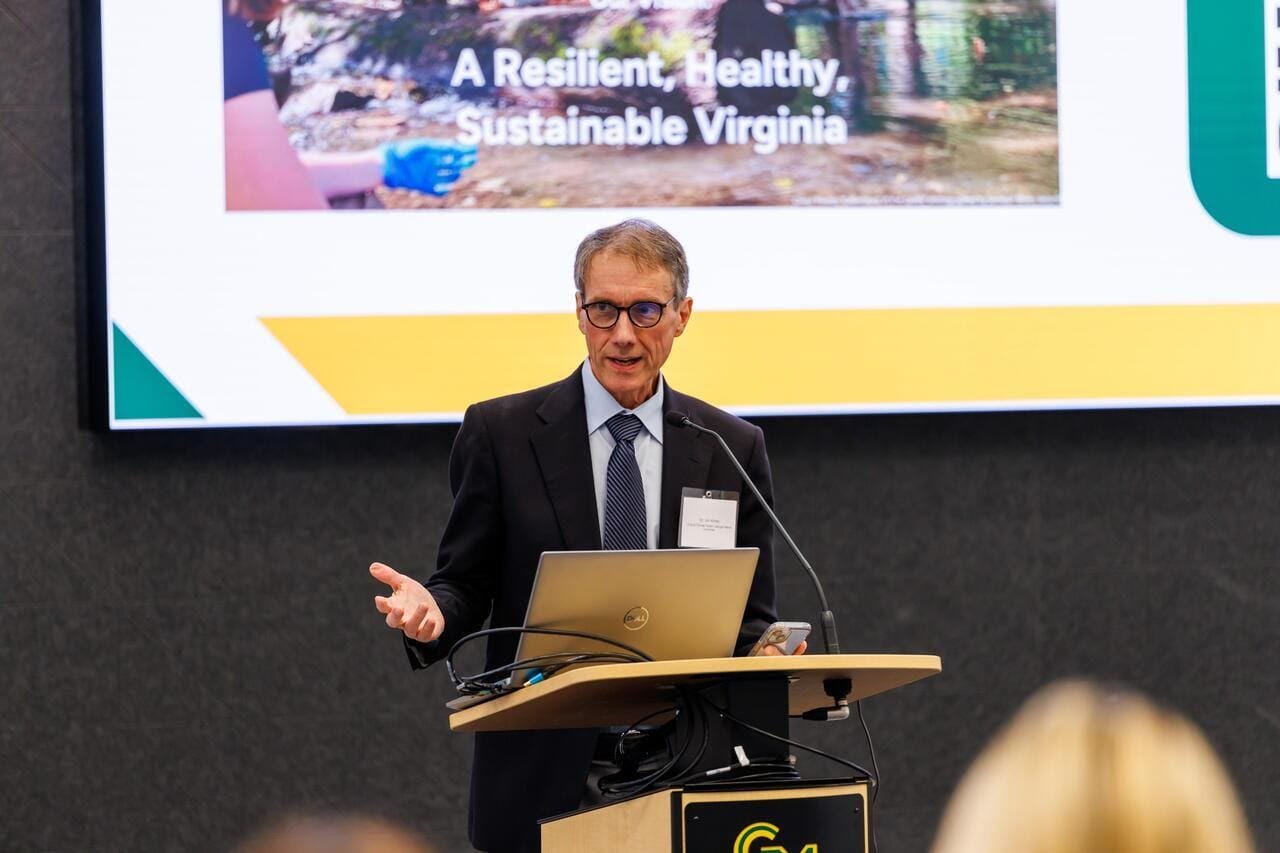
James Kinter, a professor of climate dynamics who has directed the Virginia Climate Center since its 2023 launch, will lead the center that houses the new office. The VCC was initially funded by approximately $2 million in NOAA funding secured by the late Rep. Gerry Connolly. Whether Kinter will formally head the State Climate Office has not been announced.
“Every Virginian deserves access to reliable, localized climate information, whether they’re a farmer on the Eastern Shore, an emergency manager in Southwest Virginia, or a family deciding where to buy a home. The State Climate Office makes that possible,” said Kinter. “George Mason is the ideal home for this work. We’ve spent the past three years building the scientific capacity, the community partnerships, and the trust across the commonwealth that a state climate office needs from day one.”
Residents can track the Virginia Climate Center's work at vaclimate.gmu.edu.
.jpeg)