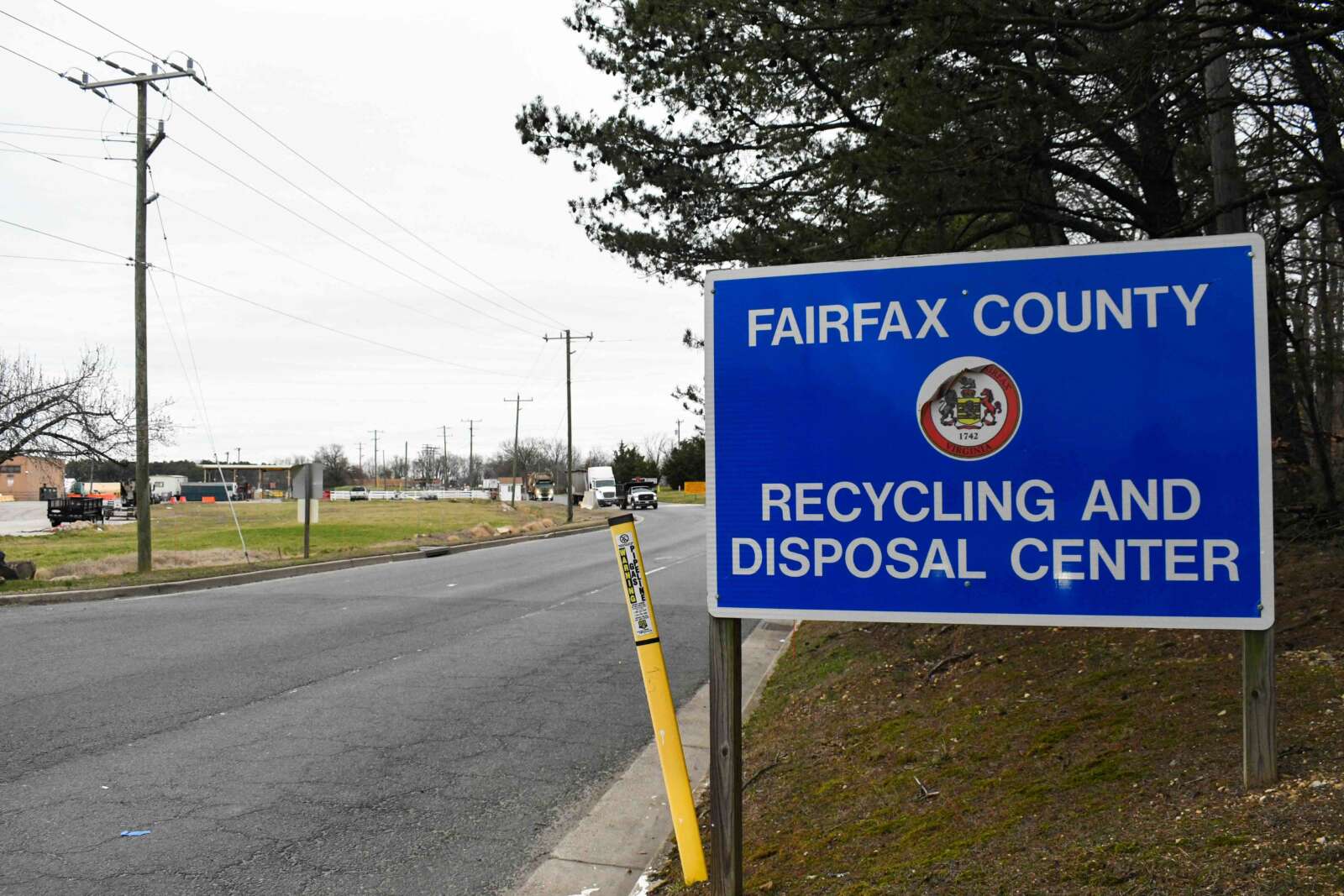
McLean and Great Falls property owners moved a step closer to higher tax bills Tuesday, after Fairfax County supervisors acknowledged that property-tax revenue may be needed to plug a $6 million hole in the county's solid waste budget.
Dranesville District Supervisor Jimmy Bierman, who represents both communities, urged colleagues at the Board of Supervisors' Environmental Committee meeting to consider every revenue option together rather than piecemeal. He told the committee to "put it all together, package it up."
The problem: tipping fees charged to deposit trash in the county system will no longer cover operating costs starting in fiscal year 2028. A reserve fund that once held roughly $74 million has been drawn down year after year and is projected to be fully depleted by then.
Christopher Herrington, director of the county's Department of Public Works and Environmental Services, told supervisors his staff found ways to patch the gap for one year but warned there is no long-term fix in sight.
County Executive Bryan Hill said he hopes to avoid tapping General Fund tax revenue, which comes from property taxes, but would not rule it out. "That absolutely is the hope, but I'm not going to say that's not going to happen," Hill said.
Why McLean residents are exposed
About 90% of Fairfax County residents hire private haulers for trash collection, either individually or through their homeowners' association. But the county requires all haulers operating within its borders to use county facilities, even though Fairfax's $90-per-ton tipping fee already tops the region. Arlington charges nothing for residential disposal; Prince William charges $40; Loudoun, $78.
County staff warned at the July 7 meeting that as fees climb, haulers may start taking trash to cheaper facilities elsewhere, a risk officials call "leakage." Staff also cautioned that forcing haulers to stay could invite litigation.
Each county resident produces about a ton of trash per year, according to county data.
Revenue options under discussion
In May , staff proposed a "sustainability fee" averaging about $60 per household annually, charged to all property owners whether they use county collection or not. Supervisors rejected it. Board Chairman Jeff McKay called it "kind of a hard sell."
At the Tuesday meeting, staff presented a menu of smaller alternatives: increasing enforcement of hauler rules (estimated at $2 million in new revenue), raising the plastic bag tax ($1 million) and selling corporate sponsorships on trash trucks ($1 million). None alone would close the gap.
Providence District Supervisor Dalia Palchik, who chairs the environmental committee, said a previously shelved proposal to create a unified sanitation district is not dead either. She told colleagues the board "can absolutely look at it again."
Franconia District Supervisor Rodney Lusk offered to work with Bierman and McKay through the Metropolitan Washington Council of Governments to explore regional solutions.
What comes next
Hill will begin developing his FY 2028 budget proposal in the coming months. The Board of Supervisors faces elections in 2027, adding political pressure to any decision to raise taxes or fees.
.jpeg)