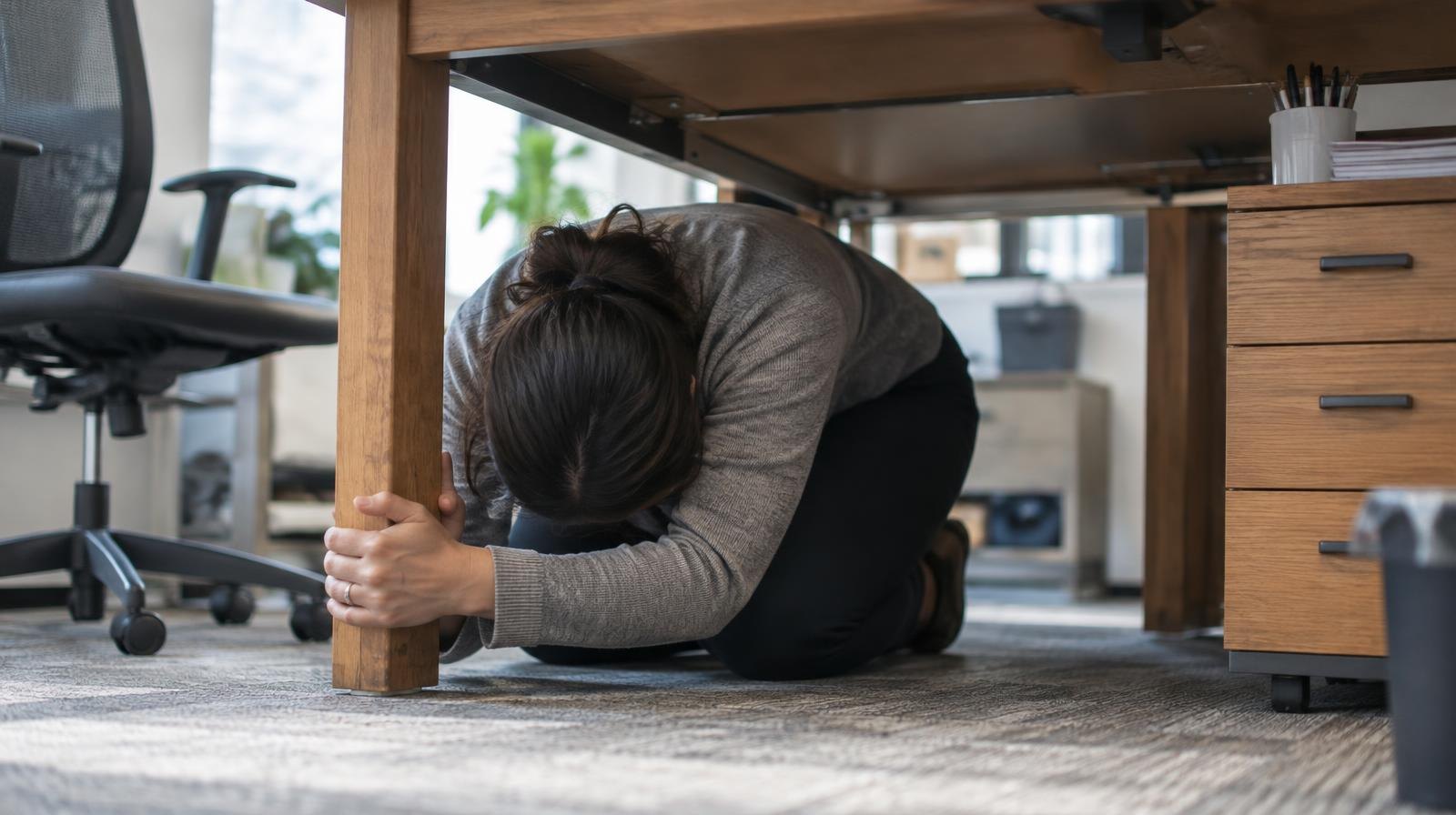
Fairfax County is asking McLean and Great Falls residents to stop what they're doing at 10:15 a.m. Thursday, Oct. 15, drop to the ground and take cover.
The Great Southeast ShakeOut, an annual earthquake preparedness drill, will have millions of people across Virginia, eight other states and Washington, D.C., practicing the same three steps at the same moment: Drop, Cover and Hold On. Participation is free. Households, schools and businesses can register at shakeout.org.
The drill carries local weight. In August 2011, a magnitude 5.8 earthquake centered near Mineral in Louisa County rattled buildings across Northern Virginia and into Washington, D.C. The quake damaged the Washington National Cathedral and caused hundreds of millions of dollars in damage, according to Patch, which first reported on the drill.
Virginia does not sit on a major tectonic plate boundary, but earthquakes can strike anywhere in the state, according to emergency preparedness guidance shared by Fairfax County officials.
What to do when shaking starts
Fairfax County guidance breaks the response into three steps: get on your hands and knees so you aren't knocked over, crawl under a sturdy desk or table to protect your head and neck, and hold on until the shaking stops. If no sturdy furniture is nearby, move to an interior wall away from windows and shield your head with your arms.
County officials warn against the so-called "triangle of life" method, which calls for sheltering beside furniture rather than beneath it. Getting under a solid surface reduces the risk of injury from falling objects, according to the guidance.
Drivers should pull over away from bridges, overpasses and buildings, stop the car and stay buckled until shaking ends. Anyone outdoors should move clear of buildings, streetlights and power lines before dropping to the ground.
Home preparedness checklist
Fairfax County officials recommend several steps residents can take before Thursday's drill:
- Anchor tall bookcases, cabinets and heavy furniture to wall studs.
- Secure televisions and monitors with mounting straps.
- Install latches on cabinets holding glassware or heavy dishes.
- Strap water heaters to wall studs to prevent tipping and gas-line damage.
- Locate the home's gas shutoff valve.
Residents are also encouraged to review emergency supply kits and identify safe spots in every room before Oct. 15.