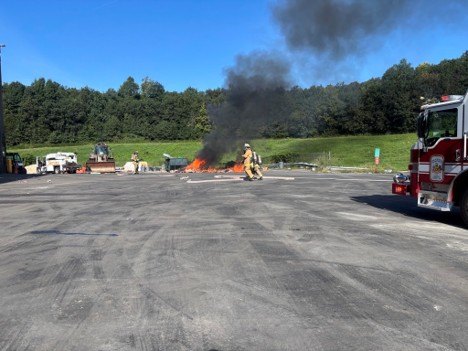
A pressurized tank exploded inside a Fairfax County trash truck the week of Sept. 1, injuring collection staff and prompting a county-wide disposal advisory.
The county's Solid Waste Management Program warned on Tuesday, Sept. 8 that rechargeable lithium-ion batteries and pressurized gas containers must never go in curbside trash or recycling bins. When crushed during collection, the items can spark, rupture or explode.
The advisory followed two recent incidents. Fairfax County Fire and Rescue crews extinguished a fire at the I-66 Transfer Station caused by a lithium-ion battery thrown in the trash. Separately, a pressurized tank compacted inside a rear-load trash truck exploded, injuring staff.
The risk is real.
"This danger was clearly seen last week when an exploding tank caused injuries to staff," Shonpaul Truss, who oversees the county's waste collection service, said in the Tuesday, Sept. 8 advisory.
Anthony Tindall, director of sustainability for the county's Solid Waste Management Program, said the I-66 Transfer Station's tipping floor holds paper products and waste wood, making improperly discarded batteries and propane tanks a direct threat to the building and employees.
What to do
Batteries: Only batteries labeled "Alkaline" or "Carbon Zinc" can go in household trash. All other types, including the lithium-ion cells found in phones, laptops, power tools, e-bikes, vapes and portable chargers, must go to a designated drop-off site. Residents can find the nearest location through the battery recycling locator referenced in the county advisory, or bring batteries to the Household Hazardous Waste areas at the I-66 Transfer Station or I-95 Landfill Complex.
If a battery type is unknown or cannot be removed from a device, the county says to bring the entire item to household hazardous waste staff.
Pressurized tanks: The I-66 Transfer Station and I-95 Landfill Complex accept helium tanks under 20 pounds, nitrogen cartridges and camping-size propane canisters. Refrigerant and oxygen tanks cannot be accepted and must be returned to the supplier or equipment provider.
Businesses must return compressed air cylinders to suppliers and work with a hazardous waste company for lithium-ion battery disposal.
Full details on accepted materials are available on the county's Household Hazardous Waste page, accessible through the linked advisory above.

.png)