The Fairfax County Board of Supervisors voted 6-4 on Tuesday, Nov. 17, to impose stricter rules on how police use stationary license plate reader cameras.
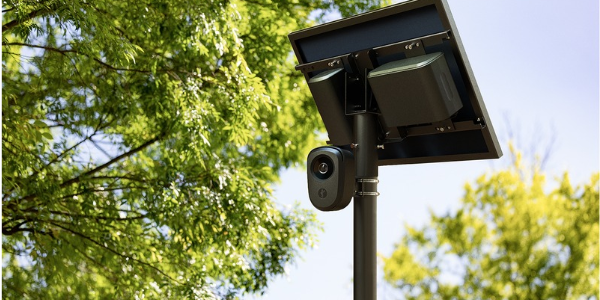
The restrictions apply to automated license plate readers, or ALPRs, operated by or accessible to the Fairfax County Police Department. The vote stops short of ending the camera program but adds new limits on data storage, access and sharing, according to a Fairfax County press release.
For McLean and Great Falls residents whose neighborhoods include these cameras, the changes mean tighter controls over who can see the data those devices collect.
Board Chairman Jeff McKay introduced the measure. "…For any public safety effort to be effective, there needs to be trust from our community and (that) our program must evolve to ensure that trust is maintained," McKay said in his board matter.
What changes
The board's direction covers eight areas:
- Data retention drops to seven days.
- Database searches will be limited to officers assigned to the police department's Real Time Crime Center.
- Data sharing with other law enforcement agencies is prohibited unless required by law, until a regional model is set up through the Metropolitan Washington Council of Governments.
- Data storage will move from Amazon cloud servers to county-owned servers. Flock Safety will no longer manage or have access to collected data.
- Audit standards will be strengthened.
- Camera locations and placement criteria will be made public.
- Private camera operators will be encouraged to adopt the county's guidelines voluntarily.
- Technology alternatives will continue to be evaluated, with a planned transition away from Flock Safety.
How the county got here
The board paused expansion of stationary Flock Safety cameras in September amid concerns about data privacy, access and potential misuse of collected information. The county then requested additional information from Flock Safety about its technology and data practices.
In October, the police department presented its existing ALPR policies on access, retention, oversight and auditing.
ALPR cameras capture license plate information that law enforcement can use in criminal investigations and other public safety activities. The technology has raised concerns about the collection, retention and sharing of vehicle-location data.
The pause on new camera installations remains in place under the board's Nov. 17 action.
What's next
County staff will provide an update on implementation progress at a special meeting of the board's Safety and Security Committee on Tuesday, Dec. 15, at 1:30 p.m.